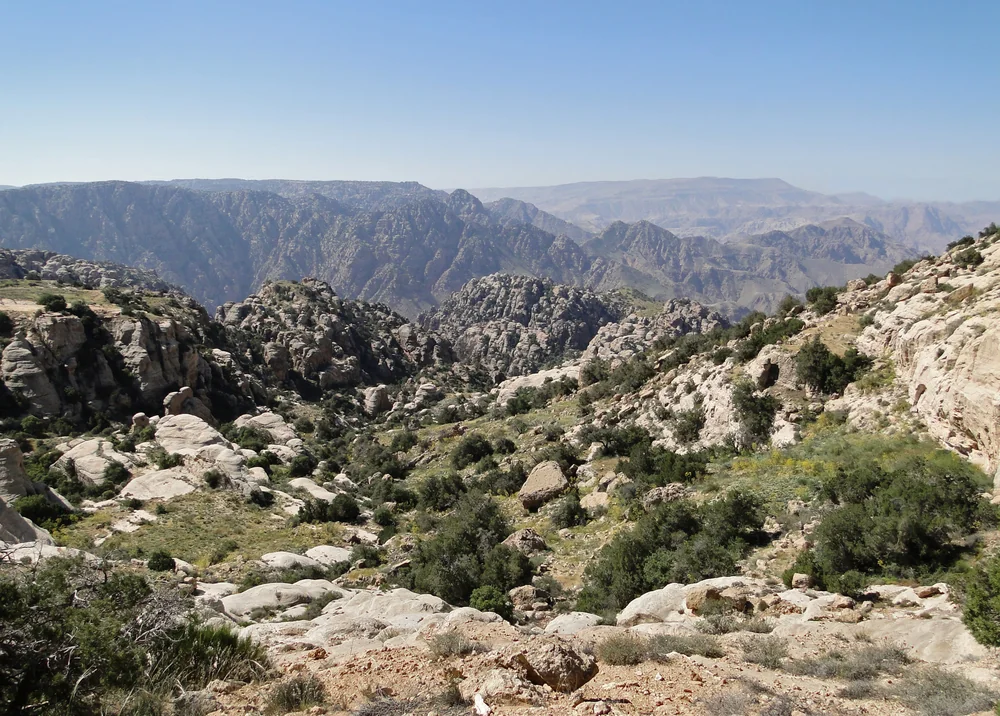
The right time for Jordan depends on the journey you want. A walking holiday through Petra and Dana asks different things of the weather than a few relaxed days beside the Red Sea. Spring and autumn are good starting points for a trip that combines several regions. But the useful question is more specific: where will you be walking, at what time of day, and how much flexibility can you leave in the route?
Spring: make room for the north
From March into May, a route through the northern hills can balance ancient sites with greener countryside. Consider pairing Jerash with Ajloun, then giving Umm Qais its own unhurried visit. Petra and Dana also make sense in a spring itinerary, provided you plan around the forecast and the demands of your chosen walks.
Treat the season as a guide rather than a weather guarantee. Amman's climate record still shows rain in March, and conditions can differ between a high plateau and a sheltered valley. Pack a light waterproof layer alongside sun protection. If a particular reserve trail is the reason for your trip, confirm its opening with the operator before arranging the rest of your day.
Autumn: a flexible choice for a first journey
September to November offers another useful window for a route from Amman through Petra to Wadi Rum. Build outdoor sightseeing around the cooler portions of the day, especially early in the season. Allow time for a long lunch or a shaded break instead of treating every daylight hour as walking time.
An autumn trip can combine a desert overnight with a coast or Dead Sea stay, but pack for changes in elevation. The clothes that feel comfortable beside the water may not be enough for an evening in the highlands. Keep a warm layer within reach during transfers rather than at the bottom of your luggage.
Summer: design the day around the heat
Summer changes the rhythm of a Jordan trip. For exposed places such as Jerash and Petra, favour an early start, shorter walking segments and a realistic turnaround point. In Amman, mix an outdoor morning with museums, galleries or a long meal. At Wadi Rum, discuss the timing of the excursion with your guide before you arrive.
Water adventures have their own operating conditions. Wadi Mujib's wet trails are seasonal and can close because of weather or water levels; the calendar alone does not confirm access. Ask the official operator about the exact trail, requirements and current conditions. Keep a separate plan for the day in case the canyon is unavailable.
Winter: trade a packed circuit for flexibility
Winter rewards a route with breathing room. Amman and the highlands can feel considerably colder than a traveller expecting desert weather might imagine. Rain is part of the season, and an overnight in Wadi Rum calls for proper warm clothing and a clear understanding of the accommodation's heating and bedding.
Aqaba can form the focus of a winter escape, with inland sightseeing added around the forecast. Avoid making every night a new hotel if weather could alter the route. When a long outdoor day is uncertain, a museum, food walk or additional time in a town can keep the trip rewarding without forcing a mountain or canyon excursion.
Match the month to your main activity
For extensive walking, choose dates around the conditions at the trail itself, not just the nearest city. For photography, leave enough time to return to a viewpoint when the light improves. For a family trip, give comfort, shade and shorter transfers more weight than fitting in another landmark.
If you are travelling during Ramadan or a holiday, check operating arrangements directly. Meal services, opening hours and transport demand may follow a different pattern. A flexible lunch plan and advance confirmation of essential transfers are more useful than assuming a standard weekly schedule.
A small packing list with a big effect
Bring layers, comfortable shoes that you have already worn, sun protection, a refillable bottle and an offline copy of your route. Add a waterproof outer layer for cooler months and practical clothing for any booked outdoor activity. Check the evening forecast as carefully as the daytime forecast.
Our planning preference is to book the experiences that matter most first, then leave one lighter day around them. That buffer gives you room to respond to the weather, recover after a long walk, or stay longer somewhere that surprises you.
A few good questions
Is there one best month for all of Jordan?
No single month suits every activity. Spring and autumn are useful starting points for a varied trip, while a coast stay, a mountain walk and a wet canyon trail need different checks.
Can I assume Wadi Mujib is open in warm weather?
No. Trail operation depends on the season and current conditions. Confirm the specific activity with the official operator before travelling.
Plan with reliable information
Researched using the official references below. Opening arrangements, transport, trails, and entry conditions can change; confirm the details for your visit directly.
- Jordan government: weather overview
- World Meteorological Organization: Amman climate
- Jordan Tourism Board: Wadi Mujib
- Jordan Tourism Board: Ramadan
Last editorial review: . Published by Explore Jordan, an independent travel guide.