A valley west of Amman holds the striking stone remains of Qasr al-Abd and a community known for craft initiatives. Iraq al-Amir makes a rewarding excursion when you combine archaeology with local life.
Qasr al-Abd
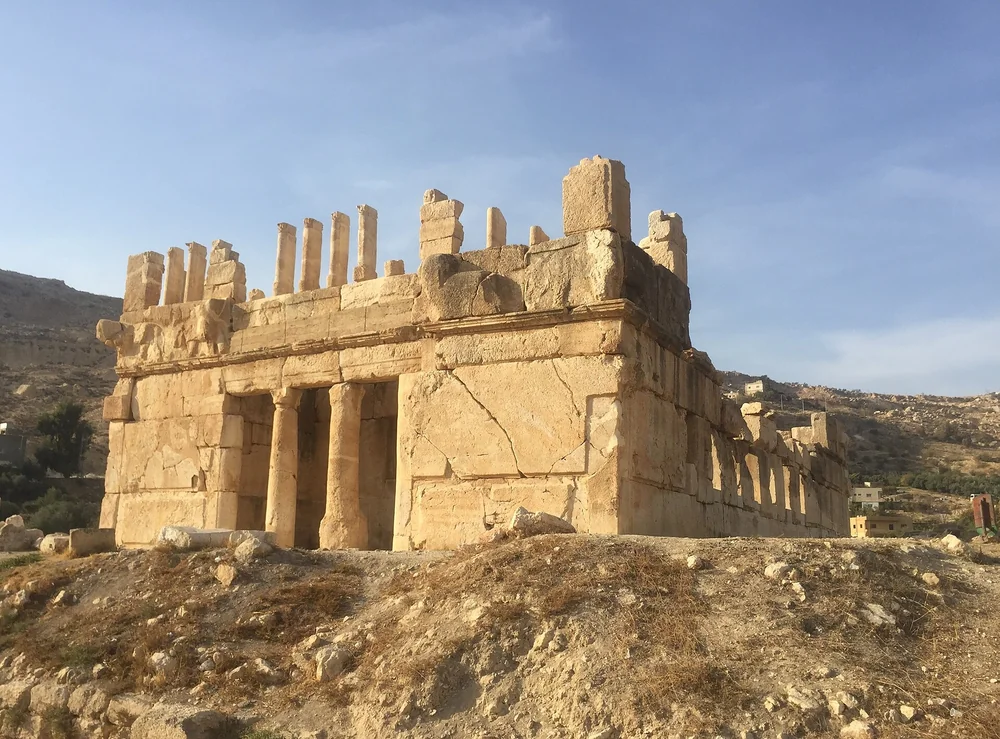
Look closely at a rare surviving example of pre-Roman monumental architecture in Jordan.
The rural setting
Take in the valley landscape around the archaeological site without rushing back to the city.
Women-led crafts
Arrange a suitable visit or workshop through the local cooperative when available.
Start with Qasr al-Abd
Iraq al-Amir lies southwest of Amman in a valley landscape with olive trees and nearby caves. Its best-known monument, Qasr al-Abd, dates to the Hellenistic period and offers a different architectural experience from the Roman and medieval sites on many Jordan itineraries.
Look carefully at the scale of the stone blocks and the surviving decorative details. A guide can help explain the building’s history and the questions surrounding its original use. Avoid allowing a quick photograph of the exterior to stand in for a proper look at the structure and its setting.
Give the valley a little time
The surrounding landscape is part of the reason to come. An excursion here can provide a welcome change from Amman’s busy streets without needing a major intercity journey. Plan the main archaeological visit first, then leave space for a meal or an arranged local activity.
Do not assume every cave, field, or path nearby is open for visitors. Ask locally about permitted routes and respect private land. If you want to walk beyond the immediate site, arrange suitable guidance and check the terrain rather than improvising an outing from a map pin.
Connect with the local craft community
The Iraq al-Amir Women’s Cooperative has developed craft and training activities intended to support local women and preserve practical skills. A visit can add a contemporary human dimension to an archaeological excursion, particularly when you have time to learn how an item is made.
Contact the cooperative or a responsible local organiser in advance to confirm whether visits, meals, or workshops are available. Ask what your booking includes and how long to allow. If buying a craft, learn about the maker and materials. Photograph people and working spaces only with permission, and avoid interrupting an activity simply to obtain a picture.
Plan a manageable outing from Amman
A half-day is a useful starting point for the monument and a modest local experience. Add more time if you have booked a workshop or a meal. Traffic and the final local roads can affect the journey, so keep your schedule flexible rather than treating proximity to the capital as a guarantee of a quick transfer.
Iraq al-Amir can complement As-Salt on a longer day, but the combination should preserve time in each place. Wear comfortable shoes, bring water, and confirm current access to the archaeological area. The most satisfying visit connects the monument, valley, and community instead of rushing between unrelated photo stops.
A few good questions
What is the main archaeological sight at Iraq al-Amir?
Qasr al-Abd is the principal monument. Its Hellenistic origins and large stone construction make it a useful contrast to the Roman remains more familiar from other Jordanian sites.
Can I just arrive for a craft workshop?
It is better to arrange the experience in advance. Workshop availability, group size, meals, and the time needed can vary, so confirm directly with the cooperative or organiser.
Plan with reliable information
Researched using the official references below. Opening arrangements, transport, trails, and entry conditions can change; confirm the details for your visit directly.
- Jordan Tourism Board: Amman and Iraq al-Amir
- TreadRight: Iraq al-Amir Women’s Cooperative
- Jordan archaeological sites and tickets
Last editorial review: . Published by Explore Jordan, an independent travel guide.