Colonnaded streets, theatres, and a great oval plaza make Jerash one of Jordan’s most rewarding ancient cities. Its scale invites you to imagine daily life as well as monumental architecture.
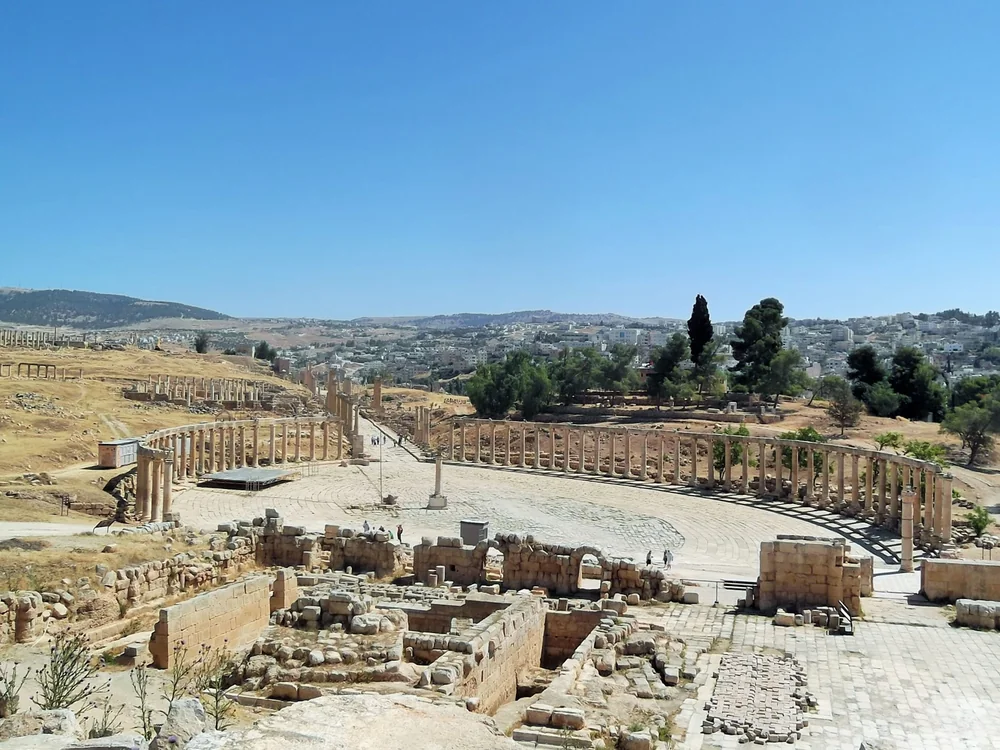
The Oval Plaza
Take in the distinctive curved colonnade before following the ancient street network.
The Cardo
Walk the main colonnaded street and look for the details that once supported a functioning city.
Temples and theatres
Compare monumental religious buildings with the spaces created for public performance.
Read the ruins as a whole city
Ancient Gerasa, now Jerash, flourished under Roman rule and belonged to the group of cities known as the Decapolis. Its surviving streets, gateways, plazas, temples, and theatres make the urban plan unusually easy to appreciate.
Start by looking at how spaces connect. A grand entrance leads toward public gathering places, while long streets organise movement through the city. This approach is more satisfying than rushing from column to column: you begin to see how architecture shaped the experience of arriving, meeting, worshipping, and trading.
Follow a generous walking circuit
Hadrian’s Arch introduces the archaeological area, with the Oval Plaza and colonnaded Cardo among the essential stops beyond it. Add the temples and theatres according to your time and energy. A guide can make sense of details that are easy to overlook when you are concentrating on the larger views.
Allow pauses in the route. Long stretches of exposed stone can become tiring, and a good visit depends more on attention than distance covered. Look back from different positions; the relationship between the plaza, temples, and surrounding hills changes as you move.
Balance Jerash with the green north
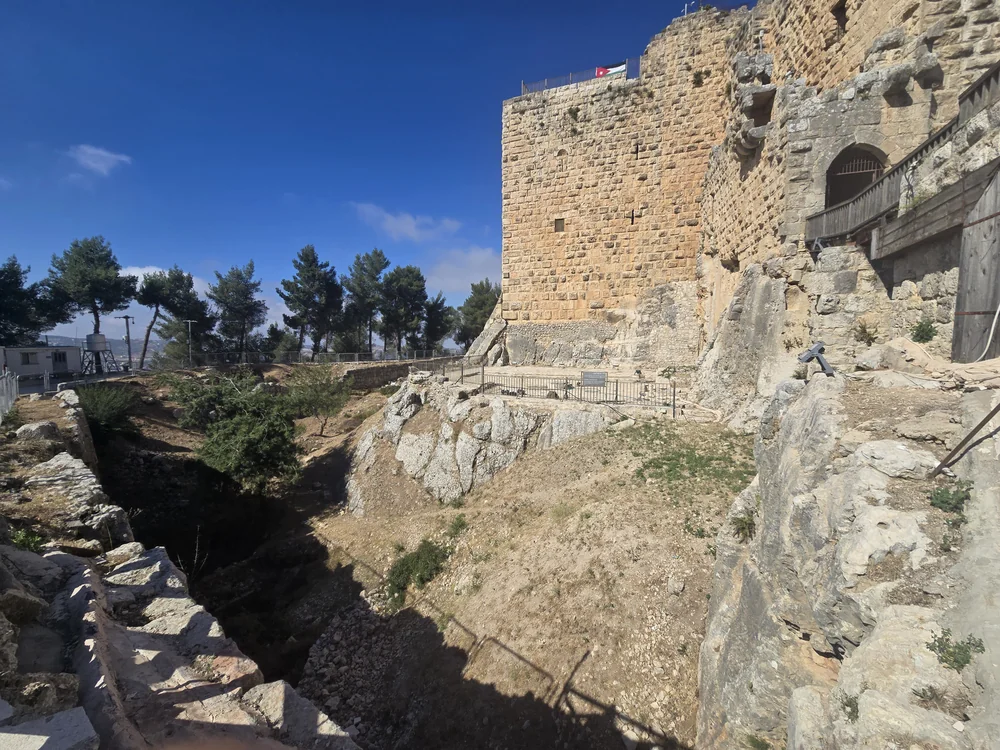
Jerash is often paired with Ajloun, where a medieval castle and forested hills introduce a very different landscape and period of history. This works best when Jerash receives a substantial part of the day rather than being reduced to a short stop between transfers.
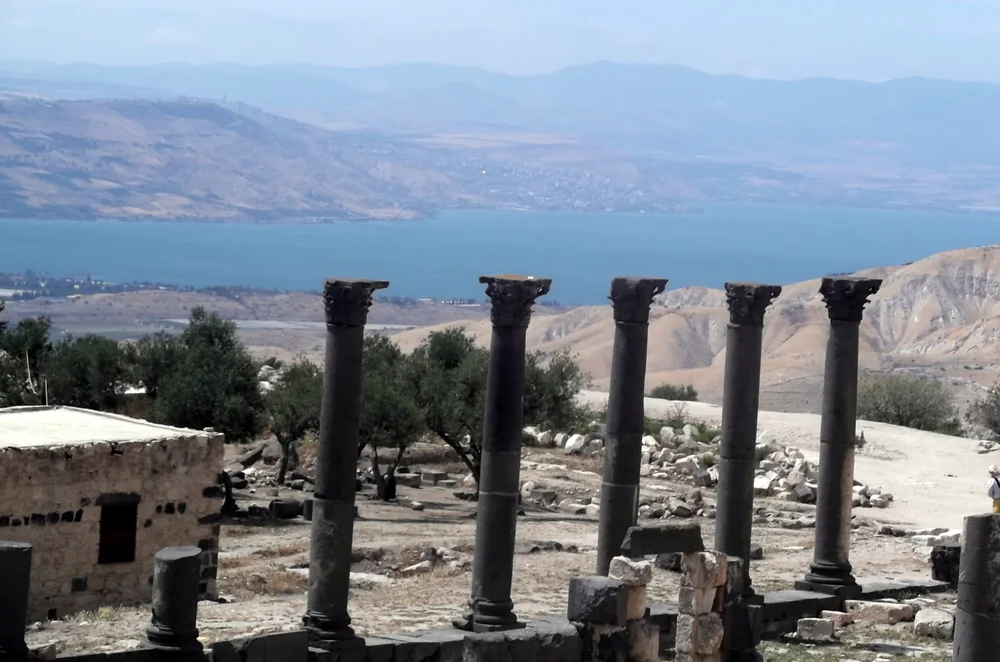
If you also want Umm Qais, consider an overnight stay in northern Jordan or a separate excursion. Trying to cover three major sites from Amman in one day leaves little room for lunch, local encounters, or the unexpected details that make travel memorable. Choose depth over the longest possible route.
Plan for an outdoor archaeological site
Wear shoes that handle worn paving and steps, and carry water and sun protection. A hat can be more useful than relying on occasional shade. Visitors with mobility limitations should ask about current entrances and accessible sections before arrival, since the ancient street surface is not uniformly level.
Performances and festivals have their own schedules; confirm a specific event with its organiser if it is central to your visit. Stay off fragile remains and respect closed excavation areas. At the end of your walk, allow time for a meal in the modern town rather than immediately returning to the highway.
A few good questions
Can I combine Jerash and Ajloun in one day?
Yes, that is a sensible northern pairing with private transport or a planned tour. Give Jerash enough time for its main walking circuit and check the closing arrangements for your second stop.
Is Jerash mainly a Roman site?
Its most recognisable monuments reflect its Roman-era prosperity, but the place has a much longer history. Look for the later layers as well as the classical streets and temples.
Plan with reliable information
Researched using the official references below. Opening arrangements, transport, trails, and entry conditions can change; confirm the details for your visit directly.
- Jordan Tourism Board: Jerash
- UNESCO tentative listing: Jerash
- Jordan archaeological sites and tickets
Last editorial review: . Published by Explore Jordan, an independent travel guide.