Above the northern Jordan Valley, ancient Gadara combines dark basalt ruins with a dramatic outlook toward the Sea of Galilee. Umm Qais is a place to slow down, explore, and stay for a meal.
Ancient Gadara
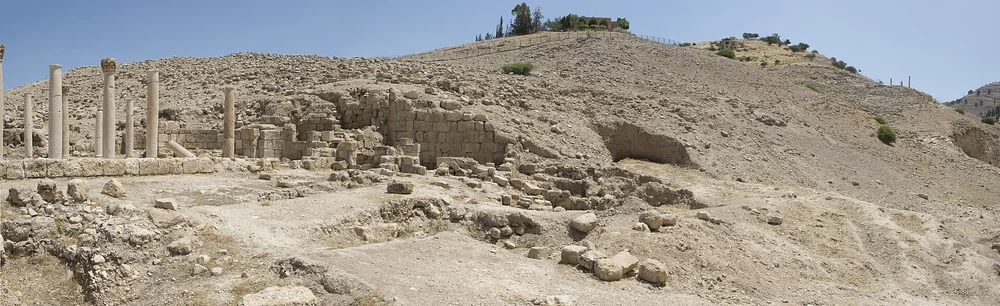
Explore the remains of a Decapolis city, including its colonnaded street and theatre.
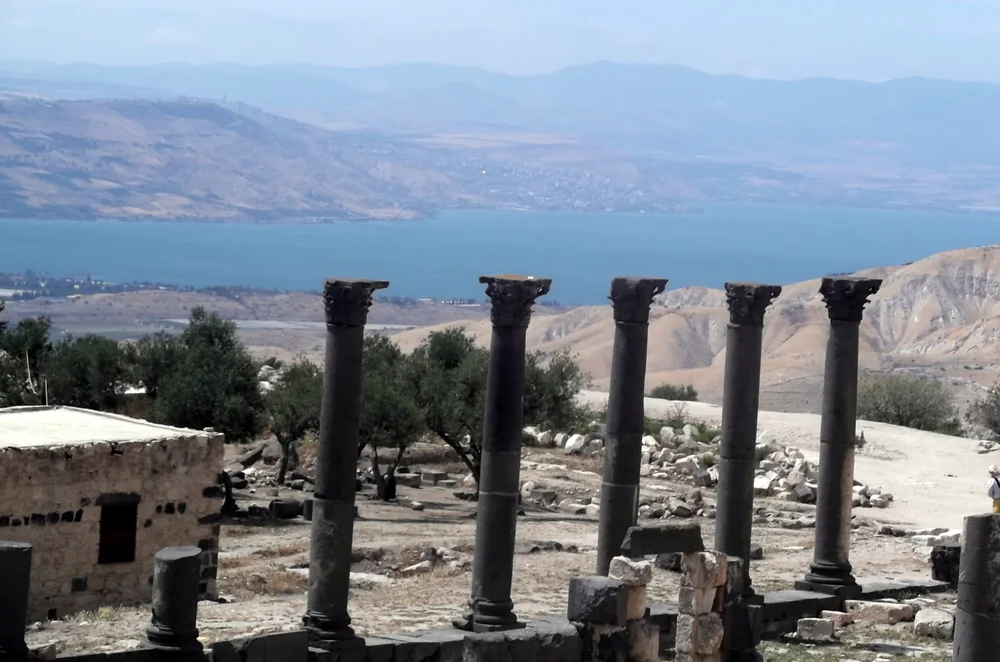
The basalt architecture
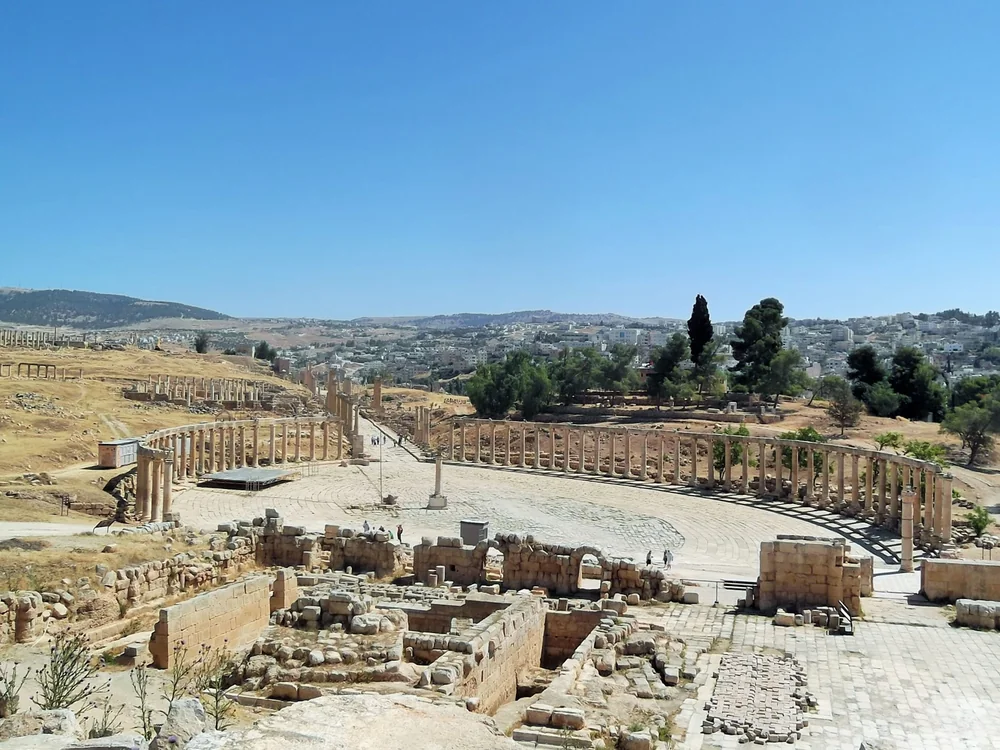
Notice how dark volcanic stone gives the site a different character from Jerash’s pale ruins.
The northern outlook
Enjoy the relationship between the archaeological site, valley, and distant water when visibility allows.
Discover Gadara’s distinctive character
Umm Qais occupies the site of ancient Gadara, a city associated with the Decapolis. Its classical remains share the hilltop with later buildings, including an Ottoman-era village. The combination gives the place a layered identity rather than a single, isolated archaeological period.
Black basalt is especially memorable here. Look at how it appears in streets, building details, and the theatre, then compare that visual character with sites elsewhere in Jordan. The setting is also part of the story: this was a city connected to a wider region, not a monument standing alone in the countryside.
Walk with both the ruins and the view in mind
Plan time for the main archaeological areas before settling at a viewpoint. The colonnaded street and theatre help establish the city’s scale, while the museum offers a closer look at finds from the area when it is open. A local guide can link the scattered remains into a more coherent walk.
Views toward the Jordan Valley and Sea of Galilee vary with weather and haze. Even on a less clear day, the immediate hilltop landscape is worth appreciating. Use designated routes and viewing areas, and avoid climbing onto unstable remains simply to improve a photograph.
Add a local experience to the visit
An unhurried meal or a locally arranged walk can turn Umm Qais from a quick archaeological stop into a fuller introduction to northern Jordan. Community-based experiences are particularly valuable when they explain the landscape through the people who live and work in it.
Confirm activities directly before arriving. Ask about walking difficulty, meeting points, and whether a meal is included. Small groups benefit from agreeing dietary needs ahead of time, and hosts appreciate clear expectations. Ask permission before photographing people in homes, workshops, or agricultural settings.
Give the far north enough time
Umm Qais can be reached on a day trip from Amman, but the return journey takes a meaningful part of the day. If you also want Jerash, Ajloun, or Pella, consider a northern overnight rather than combining every stop into one ambitious circuit.
Two complementary places often make a stronger day than three rushed visits. Pair archaeology with a village experience, or reserve an afternoon for the landscape and a meal. Carry water and sun protection for the exposed site, along with a layer for cooler or windy conditions. Check current site access and transport arrangements, especially if you are travelling without a private vehicle.
A few good questions
Is Umm Qais worth visiting if I have seen Jerash?
Yes, especially if you enjoy archaeology. Its basalt buildings, later village, and hilltop landscape make the experience different from the larger classical street plan at Jerash.
Should I stay overnight in northern Jordan?
An overnight stay is useful if you want Umm Qais, a local meal or activity, and another substantial northern site without spending much of the day returning to Amman.
Plan with reliable information
Researched using the official references below. Opening arrangements, transport, trails, and entry conditions can change; confirm the details for your visit directly.
Last editorial review: . Published by Explore Jordan, an independent travel guide.