At Umm ar-Rasas, mosaic floors and the remains of churches reveal a remarkable chapter of Jordan’s late antique history. This quieter archaeological site rewards visitors who enjoy looking beyond the most familiar landmarks.
St Stephen’s mosaics
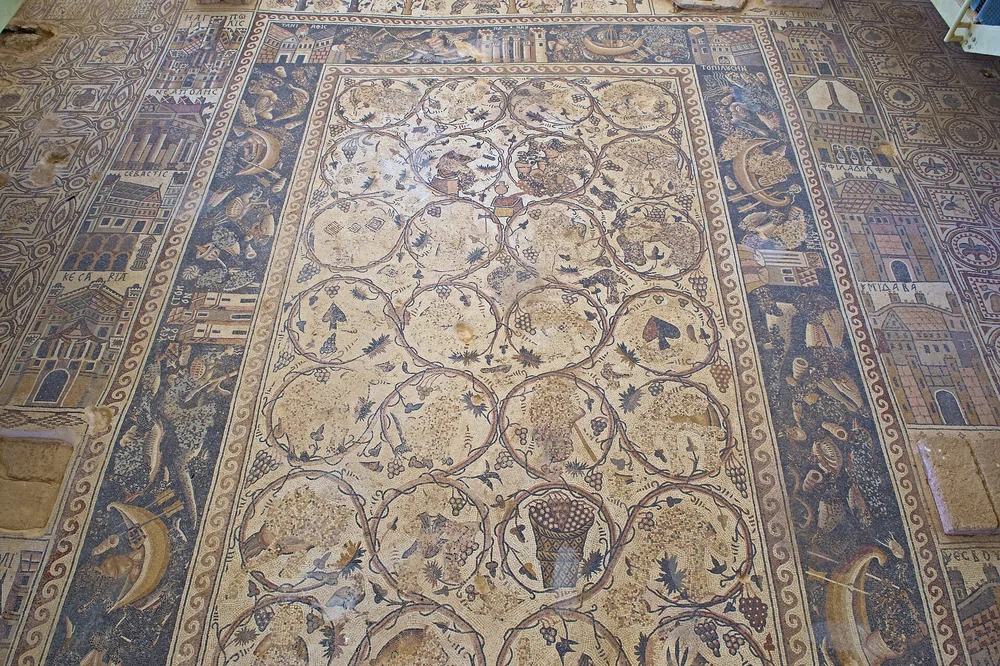
Study the celebrated mosaic floor with its representations of regional towns.
A layered settlement
Understand how a Roman military site developed into a town with substantial religious buildings.
The open archaeological landscape
Explore the authorised areas slowly and notice how much remains part of ongoing archaeological study.
A different kind of archaeological visit
Umm ar-Rasas, listed by UNESCO as Um er-Rasas or Kastrom Mefa’a, preserves remains from Roman, Byzantine, and early Islamic periods. The site began as a military settlement and developed into a town. Its churches and mosaics are central to its significance.
Unlike a place defined by one dramatic façade, Umm ar-Rasas asks you to look at floors, foundations, and the relationships between buildings. Come with an interest in detail and a willingness to use the interpretation. A guide or a little advance reading can make the scattered remains much easier to understand.
Give the mosaics your full attention
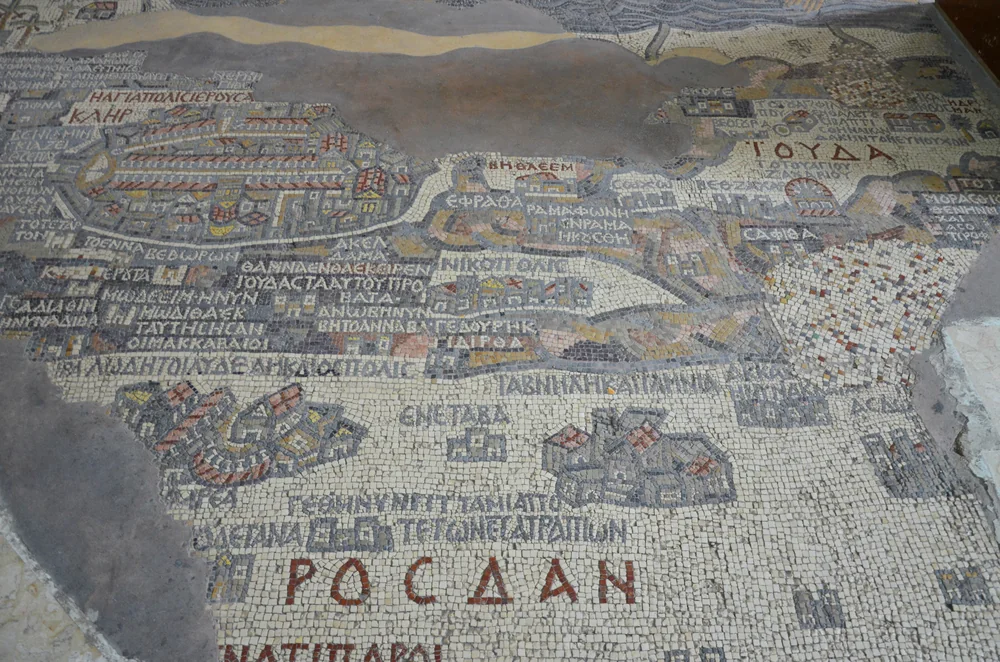
The mosaic floor associated with the Church of St Stephen is the principal highlight, especially the depictions of towns in the region. Look at how buildings and place names form part of the composition, then compare the images with other mosaic traditions you may have seen in Madaba.
Take time to study smaller sections instead of trying to absorb the whole surface at once. Follow the viewing arrangements and avoid touching or crossing protected areas. Conservation structures may influence the way you see and photograph the mosaics; preserving the floors matters more than obtaining an unobstructed angle.
Look beyond the main church
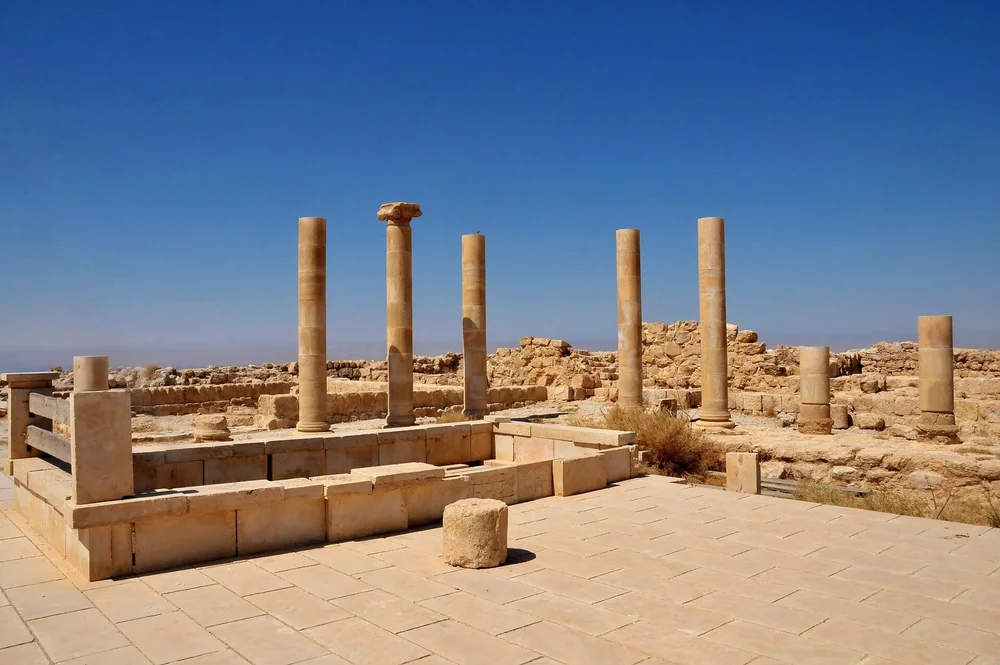
The wider property includes a fortified area, church remains, and evidence of the surrounding settlement. UNESCO also highlights towers associated with the tradition of stylite ascetics. Not every feature will be equally accessible or easy to interpret, so ask which areas are appropriate to visit.
A site plan helps you distinguish a purposeful circuit from wandering among remains. Keep to authorised paths and leave loose material undisturbed. The open setting is part of the appeal, but it also means that water, sun protection, and sensible footwear deserve attention even for a relatively short visit.
Build a mosaic-focused central Jordan day
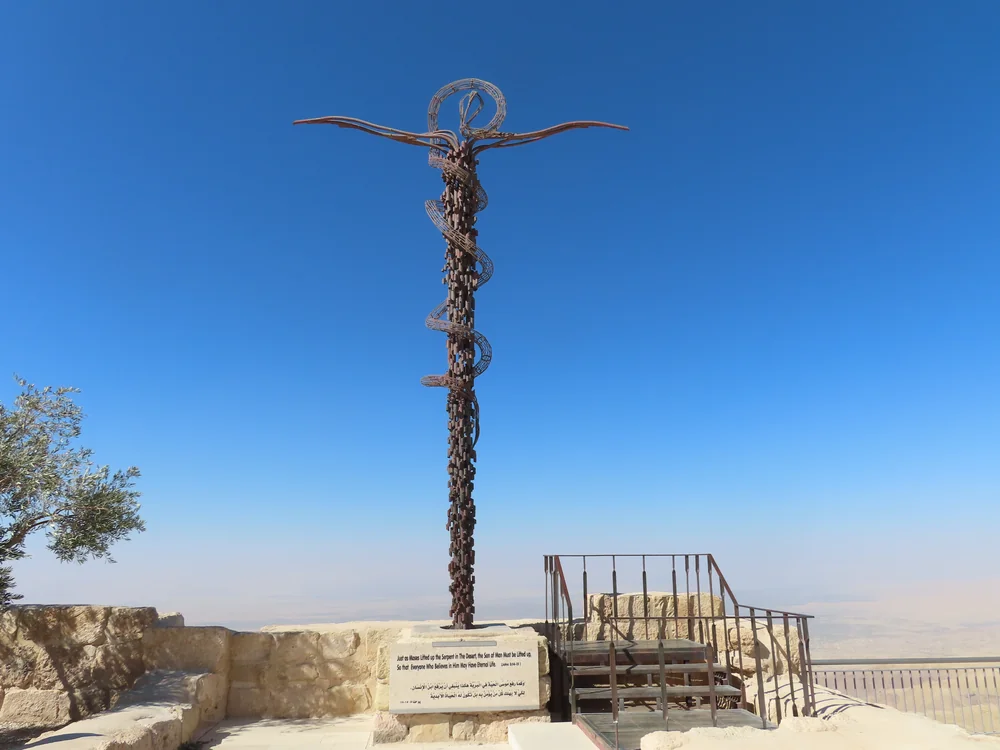
Madaba is a useful base for a visit to Umm ar-Rasas. Seeing both can help you compare artistic themes and the different settings in which mosaic floors were created. Mount Nebo offers another related stop, but adding every central Jordan site in one day can make the journey feel fragmented.
Choose the combination that matches your interest. Art-focused visitors may prefer a longer stay with the mosaics, while general travellers may combine the site with one other destination and a relaxed lunch. Confirm current opening and transport arrangements, and allow around one to two hours as a starting point for planning rather than a fixed limit.
A few good questions
How does Umm ar-Rasas compare with Madaba?
Madaba places mosaics within a living city and active churches. Umm ar-Rasas offers a more open archaeological landscape, with the St Stephen mosaic as a major focus. They complement each other well.
Is Umm ar-Rasas a good stop for a first Jordan trip?
It is particularly rewarding if you enjoy mosaics or late antique history and have time beyond the main north-to-south highlights. It fits best into a considered central Jordan itinerary.
Plan with reliable information
Researched using the official references below. Opening arrangements, transport, trails, and entry conditions can change; confirm the details for your visit directly.
Last editorial review: . Published by Explore Jordan, an independent travel guide.