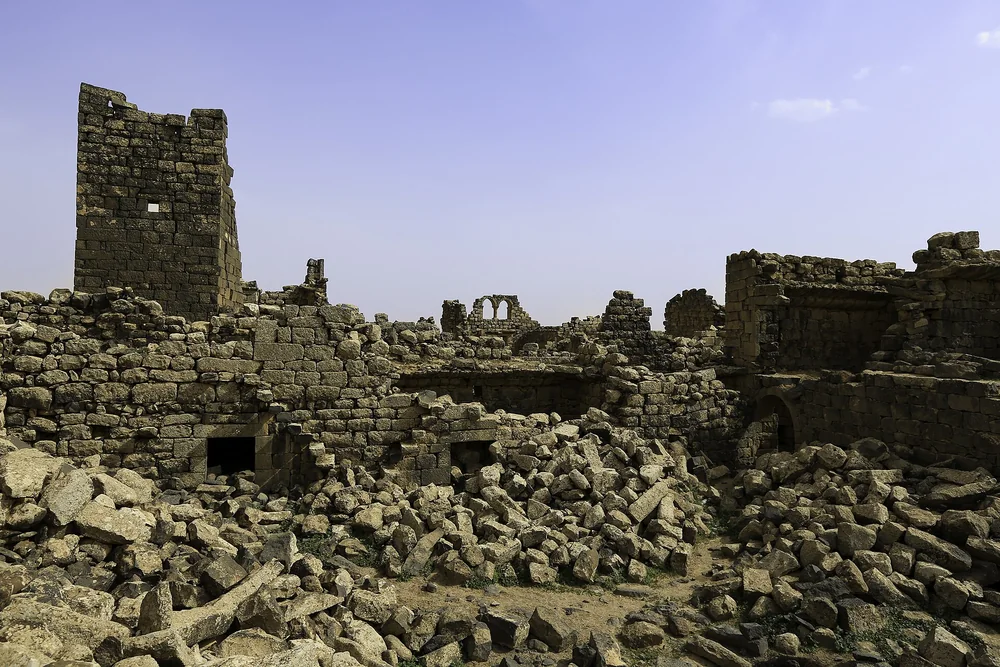
Dark basalt houses, courtyards, and ancient water systems make Umm al-Jimal unlike Jordan’s better-known sandstone sites. Explore the architecture of everyday life on the edge of the northeastern desert.
Basalt architecture
Look at the stonework that allowed substantial buildings to stand in an exposed landscape.
Water and settlement
Understand how water collection helped sustain the community and its agricultural surroundings.
Local heritage experiences
Look for community-led interpretation and crafts that connect the ancient site with the modern town.
Discover a settlement built for daily life
Umm al-Jimal’s UNESCO-listed remains preserve a rural settlement that flourished in the Byzantine and early Islamic periods on the site of earlier occupation. Its dark basalt buildings express the architectural traditions of the Hauran region. Houses, religious buildings, and water infrastructure make everyday life a central theme of the visit.
This is a useful counterpoint to Jordan’s monumental tombs and royal sites. Ask how people lived, stored supplies, collected water, and adapted older buildings. Those questions can make a street of ruined houses as compelling as a famous temple.
Look at the stonework, not only the skyline
Basalt gives the site its strong visual identity, but the construction techniques are equally interesting. Notice how openings, supports, and surviving upper portions were arranged, and use interpretation to understand which features are original and which have been conserved.
A local guide can help you follow a coherent route through a site that may otherwise seem repetitive at first glance. Do not enter unstable interiors or climb onto walls to inspect details. The fact that a building stands high above the ground does not mean every part is safe or open to visitors.
Follow the story of water and community
Water catchment was essential to the settlement and its surrounding agriculture. Reservoirs and related features help explain how a substantial community could function in this landscape. Look at these practical systems alongside the larger buildings rather than treating them as secondary details.
The modern community is also part of Umm al-Jimal’s story. Locally arranged heritage activities, traditional food, and craft experiences can add meaning to the archaeological visit. Confirm availability in advance and ask who leads the activity. Small-group experiences work best when visitors respect the time, homes, and working spaces of their hosts.
Choose a route into northeastern Jordan
Umm al-Jimal is a worthwhile destination for travellers with an interest in architecture, archaeology, or places beyond the usual main circuit. It can be reached from Amman or a northern base, but the best combination depends on how much driving you want in the day.
Do not assume that every site labelled northern or eastern Jordan is close enough for an easy cluster. Select one other stop only after checking the actual route. Bring water, sun protection, and sturdy footwear, and ask about current visitor access. An unhurried visit with interpretation is preferable to racing around the ruins simply to say you have seen another World Heritage property.
A few good questions
What makes Umm al-Jimal distinctive?
Its extensive basalt domestic architecture, water systems, and village-scale layout offer a close look at how a community lived. The experience is different from a visit centred on a single monumental building.
When was Umm al-Jimal added to the World Heritage List?
UNESCO inscribed Umm al-Jimal in 2024. Its listing recognises the significance of the settlement and its surviving architectural and cultural evidence.
Plan with reliable information
Researched using the official references below. Opening arrangements, transport, trails, and entry conditions can change; confirm the details for your visit directly.
- UNESCO: Umm Al-Jimal
- Jordan Tourism Board: Umm al-Jimal
- The Umm el-Jimal Project: visitor information
Last editorial review: . Published by Explore Jordan, an independent travel guide.